
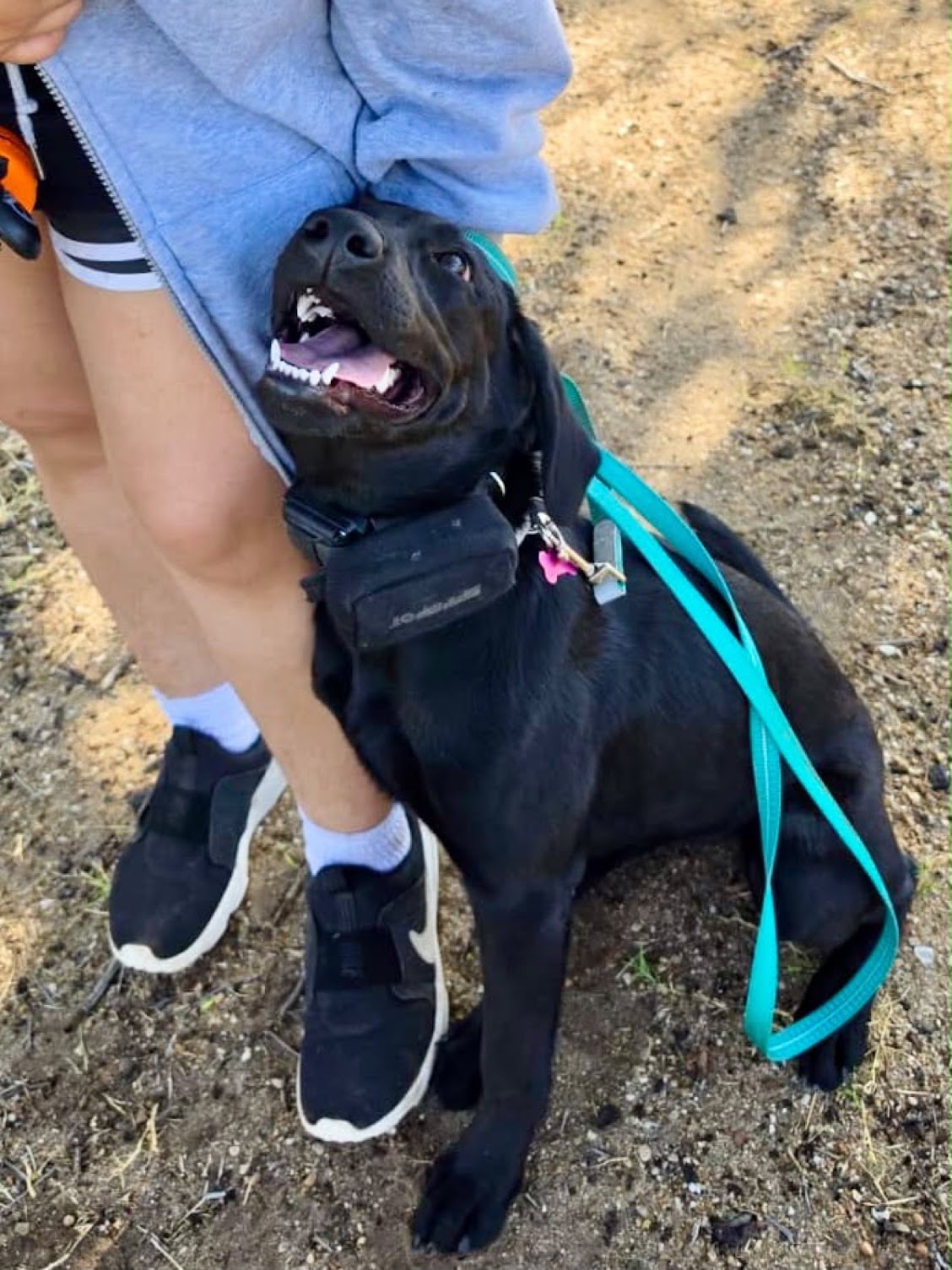
Those needle teeth hurt, and you’re not imagining it
If your hands look like you lost a fight with a mesquite bush and your kids have started running from the new puppy, you are in good company. Puppy biting is the single most common complaint we hear from Amarillo families. Puppy teeth are sharp, and a puppy who has decided your pant leg is a tug toy can turn every walk across the kitchen into a battle.
I’m Tiffany Singleton, owner and Master Dog Trainer at Off Leash K9 Training of Amarillo. I have worked with dogs for more than 20 years, starting at 15 in a veterinary clinic, and I raise Jack Russell Terriers, who are not exactly known for gentle mouths. Here is the good news: in a young puppy, mouthing and biting are normal, and they are very fixable. What matters is how you respond to them in these first few months.
Why puppies bite
Puppies explore the world with their mouths the way toddlers explore it with their hands. In the litter, they learn a lot about bite pressure from their brothers and sisters: bite too hard and the game stops. Your puppy left that classroom early, so now you are the teacher. Here is what is usually behind the biting:
- Play. Your puppy is inviting you into the same rough games they played with their littermates.
- Overtiredness. Young puppies need a lot of sleep. A puppy who has been awake and busy too long often gets bitier, not calmer. If the biting peaks in the evening, this is a big part of it.
- Teething. As adult teeth come in, your puppy’s mouth is sore and chewing feels good.
- Attention. If biting reliably makes you squeal, wave your hands or run, your puppy has found a great way to start a game.
The reason matters, because the fix for an overtired puppy is different from the fix for a bored one.
What makes puppy biting worse
- Hand wrestling and rough play. It is fun for a minute, but it teaches your puppy that hands are toys. Save the rough games for a tug toy.
- Pulling your hand away fast. Jerking your hand back turns you into a moving squeaky toy. Go still instead.
- Yelling or swatting. That gets most puppies more excited, and some puppies learn to be afraid of hands, which can lead to real biting later.
- Skipping naps. A puppy who is up for hours at a time is running on fumes, and their self-control goes first.
A step-by-step puppy biting training plan
Here is the plan I give families. Use it every time, with everyone in the house, for two to three weeks before you judge it.
- Always have a toy ready. Keep a tug toy or chew in reach in every room. When your puppy goes for your hand, offer the toy instead and praise them for biting it.
- Make teeth on skin end the fun. If your puppy bites you anyway, go still, say a calm “oops,” and stand up or step away for 10 to 20 seconds. Then come back and try again. Your puppy learns that biting people makes the fun stop, and biting toys keeps it going.
- Build a nap schedule. Most young puppies do well with an hour or so awake followed by a nap in their crate or pen. If biting suddenly gets wild, put your puppy down for a nap before you assume they are being bad. Our guide on how to crate train a puppy can help you set that up.
- Reward a calm mouth. When your puppy licks your hand or sniffs it without biting, mark it with “yes” and give a treat. You want to catch the good choices, not only react to the bad ones.
- Teach a trade. Practice swapping a toy for a treat, then giving the toy back. A puppy who knows a trade is coming will let go of things, including your sleeve, much more easily.
- Set kid rules. Kids should sit on the floor or couch to pet the puppy, not run around with them. If the puppy gets mouthy, the kid stands still and an adult steps in with a toy. Never leave a young puppy and small children together without an adult watching.
What a good day looks like for a mouthy puppy
A lot of puppy biting problems are really schedule problems. Here is roughly the daily rhythm I recommend for a young puppy. Adjust the times to your family, but keep the rhythm.
- Wake up: straight outside to potty, then breakfast from a food puzzle or a few handfuls used for a short training game.
- Play and explore: 30 to 60 minutes of play with toys, a short walk or a new place to sniff. Keep a tug toy in your pocket for mouthy moments.
- Nap: potty trip, then into the crate or pen with a chew. Many young puppies sleep one to two hours.
- Repeat: potty, play, short training, nap, all through the day.
- Evening: this is “witching hour” for a lot of puppies. Plan a calm activity like a chew or a sniff walk instead of rough play, and get them to bed before they melt down.
When families follow a rhythm like this, the evening biting frenzy is usually the first thing to improve. Your puppy isn’t bad. They’re just tired.
What to chew instead
Give your puppy a few kinds of chews and rotate them so they stay interesting: a rubber toy you can stuff with soaked kibble and freeze, a rope or fleece tug toy for play with you, and a firmer chew for quiet time. Frozen toys can be a big help during teething. Skip anything hard enough to crack a tooth, and always watch your puppy with a new chew until you know how they handle it. Pick up old shoes and socks rather than letting your puppy have them, because a puppy can’t tell an old sock from a new one.
Getting the whole family on the same page
Puppies learn fastest when everyone responds the same way. Agree on the words you use (“yes” for a good choice, “oops” when teeth hit skin), where the toys are kept, and who does which potty trip. If one person plays rough and another follows the plan, your puppy just learns that some people are fair game.
How long does puppy biting last?
For most puppies, biting peaks somewhere in the first few months and drops off as they finish teething and learn better ways to play. With consistent work, most families see a big change within a few weeks. Expect some bad days around teething and again in adolescence, around four to six months, when many puppies start testing what they can get away with. That is normal. Stick with the plan.
When biting is not normal puppy play
Most puppy biting is play. Talk to a trainer, and your veterinarian, if you see:
- a stiff, frozen body or a hard stare before a bite;
- growling or snapping when someone comes near their food, toys or bed;
- biting when being touched, handled or picked up, especially if it is getting worse;
- bites that break skin often, even when you are calm and quiet;
- biting that is not getting better at all as your puppy gets older.
None of these mean you have a bad puppy, but they do mean you should get help early, while it is easiest to change.
Getting help with puppy training in Amarillo
None of our puppy programs use an e-collar. If you want help at home, our puppy training lessons work on puppy manners over four one-hour sessions, and a one-hour puppy training consultation gets you a plan for your house fast. Basic Marker Mastery uses markers, clicker training and rewards, with no e-collar or prong collar, to build sit, come, place and loose-leash walking.
For puppies between 10 and 16 weeks old, the 2-Week Puppy Board & Train lays the foundation while your puppy lives with our trainer, with daily video updates for you. Payment plans are available. Call us today to learn more about payment options. And if barking is your next battle, read our guide on how to stop excessive dog barking.